
National News
Kano appoints new Bureau of Statistics DG


Kano State Governor Abba Yusuf has approved the appointment of Dr. Suraj Sulaiman as the new Statistician-General and Director-General of the Kano State Bureau of Statistics.
The announcement, made in a statement by the governor’s spokesperson, Sunusi Bature, on Monday, confirmed that the appointment takes immediate effect.
Benue post Nigeria reports that the appointment follows the completion of the tenure of the former Statistician-General, Associate Professor Aliyu Isa Aliyu, who was recently elevated to the position of Commissioner for Livestock Development.
Bature said Yusuf has directed that the official handover and taking-over ceremony be held between Monday and Friday this week.
The statement reads, “The appointment, which takes immediate effect, follows the completion of the tenure of the former Statistician-General Associate Professor Aliyu Isa Aliyu, who was elevated to the position of Commissioner for Livestock Development.”
Sulaiman is an academic and mathematician with extensive experience in research, teaching and statistical analysis.
He earned a PhD in Mathematics from Universiti Teknologi Malaysia (2015–2018), completing a doctoral thesis titled “New Method of Computing the Projective Polynomial Resultant Based on Dixon, Jouanolou and Jacobian Matrices.”
He also holds an MSc in Mathematics from Yasar University, Turkey (2012–2014), and a BSc in Mathematics from Kano University of Science and Technology, Wudil (2006–2010).
Sulaiman began his tertiary studies at the College of Arts, Science and Remedial Studies, Kano, where he obtained a Diploma in Mathematics Education (2004–2006).
Yusuf, in his message of felicitation as the DG of the Kano Bureau of Statistics, congratulated Sulaiman on his well-deserved appointment, expressing confidence that his wealth of academic and professional experience will reposition the Bureau for more effective service delivery.
The governor reaffirmed his administration’s commitment to enhancing data-driven governance, emphasising that reliable statistics are crucial for effective planning, transparency, and sustainable development in Kano State.


The Nigerian Economic Summit Group (NESG) has highlighted the urgent need for job creation in Nigeria, warning that the country must generate at least 27 million new formal jobs by 2030 to curb rising unemployment. This translates to roughly 4.5 million jobs per year as Nigeria’s working-age population is projected to reach 168 million within the decade.
The warning comes from the NESG’s latest report, “From Hustle to Decent Work: Unlocking Jobs and Productivity for Economic Transformation in Nigeria,” which was unveiled during the 31st Nigerian Economic Summit (NES #31) held in Abuja.
The report calls for an urgent and coordinated national response to tackle unemployment, raise productivity, and drive economic transformation. It warned that without decisive action, unemployment and underemployment could double by the end of the decade, trapping millions of Nigerians in low-skilled, low-paying, and vulnerable work.
According to the NESG, the future of Nigeria’s workforce depends on how quickly the country can move from a “hustle economy” dominated by informal activities to one that delivers decent and productive employment.
Speaking at the summit, Mr. Niyi Yusuf, Chairman of the NESG, said Nigeria’s next phase of reform must focus on job creation, productivity, and inclusive growth.
“The challenge before us is to move decisively into the consolidation phase, embedding reforms in ways that drive jobs, growth, and inclusion, while simultaneously laying the foundations for long-term transformation that secures prosperity for every Nigerian,” Yusuf said.
He stated that while past policies had concentrated on macroeconomic stabilization, the time has come to translate those efforts into sustained job creation and real improvements in living standards.
Presenting the report, Dr. Wilson Erumebor, Senior Economist at the NESG, said the jobs crisis in Nigeria has gone beyond the question of employment numbers and now represents a fundamental development challenge.
“This is not just a labour market issue; it is a huge development challenge,” Erumebor said. “Without decisive reforms to create decent and productive jobs, an entire generation risks being trapped in vulnerable work that neither lifts families out of poverty nor moves the nation forward.”
He warned that the structure of Nigeria’s economy has created a situation where the vast majority of citizens depend on informal, insecure work to survive.
“The weak private sector capacity and reliance on the government for wage employment in some states have left millions of Nigerians with the option of finding work in the informal economy,” he said. “The informal sector has become the default employer, absorbing a significant share of the country’s workforce.”
Erumebor noted that informal jobs, often characterised by low pay, limited security, and minimal productivity, accounted for 92.2 percent of total employment in 2023 and rose to 93 percent in the second quarter of 2024.
He described this trend as alarming, adding that it reflects “the limited private and public investment in sectors that can deliver quality jobs at scale.”
Citing data from the report, Erumebor revealed that “a review of informality across the country shows that in more than 18 Nigerian states, informal employment accounts for over 94 percent of total employment. In states such as Kebbi, Abia, Benue, and Borno, the shares are as high as 98 percent, 97.4 percent, 97.3 percent, and 97.3 percent, respectively.”
According to him, “this scale of informality has huge implications. Not only does it limit the country’s productivity growth, but it also undermines revenue mobilisation, particularly taxes.”
He added that workers in the informal economy “often lack social protection, healthcare, pensions, and legal rights, leaving them highly vulnerable to economic shocks. For many workers, daily earnings are not stable, and job security is not guaranteed.”
To tackle these challenges, the report introduced the Nigeria Works Framework, a blueprint designed to reposition Nigeria’s economy around productivity, enterprise, and inclusive growth.
The framework lays out a comprehensive Jobs and Productivity Agenda, focusing on the development of skills for productivity, sectoral engines of growth, enterprise-led development (especially for small businesses), upgrading the informal economy, strengthening data and institutional systems, and promoting productivity as the foundation of national prosperity.
According to the report, the framework will serve as a guide for policymakers, the private sector, and development partners to create quality jobs and raise living standards over the next decade.
Erumebor said the NESG envisions “a Nigeria where productivity becomes the central metric of national competitiveness—tracked, measured, and elevated as the foundation of shared prosperity.”
The report identified manufacturing, construction, information and communications technology (ICT), and professional services as the sectors with the greatest potential for large-scale job creation and productivity growth.
It stressed that investing in these sectors could accelerate industrialization, drive innovation, and generate millions of decent jobs, particularly for young Nigerians entering the labour market each year.
The NESG urged the Federal Government, state governments, and the private sector to treat job creation and productivity improvement as national priorities, noting that these are the true pillars of economic resilience and social stability.
“The scale of the challenge demands bold, coordinated action,” the report stated. “Nigeria must adopt a productivity-led growth strategy that expands decent work opportunities and ensures that no citizen is left behind.”
The report also reaffirmed the NESG’s commitment to supporting the implementation of practical policy measures that will strengthen the link between economic growth and employment outcomes.
“Nigeria’s population will reach 275 million by 2030,” it stated. “To stabilise unemployment at current levels, the country must create 27 million new jobs between 2025 and 2030. Productivity must therefore become the central focus of national planning.”

The Deputy Speaker of the Osun State House of Assembly, Akinyode Oyewusi, has led a government delegation to visit and commiserate with the families of victims killed by operatives of the Amotekun Corps in Akinlalu community, Ife North Local Government Area.
According to reports, the tragic incident occurred last week when members of the Amotekun Corps stormed the community after a suspected thief allegedly snatched a rifle. The operation reportedly led to the deaths of four people, including three members of the same family, at the community’s market square near the town’s palace.
The incident sparked widespread outrage, prompting the Osun State Police Command and the state government to launch investigations. Governor Ademola Adeleke also dispatched a delegation to visit the affected families and ensure justice is served.
During the visit to the palace of the Alakinlalu, Oyewusi, who represents the Ife North State Constituency, assured the community that the government would not allow the matter to be swept under the carpet.
“We are here to commiserate with the families and the town over what happened. We also want to beg the youth of Akinlalu to allow peace to reign,” Oyewusi said. “The government and the police have already started investigations, and I assure you that justice will be served. The perpetrators will not go free.”
He urged the youth not to take the law into their own hands while promising that the government would support the victims’ families.
Addressing the bereaved families, the Deputy Speaker said, “My message to you is to accept this as fate. I pray God will comfort you, and I want to assure you that the government will do everything necessary to support these families.”
The youth leader of Akinlalu, Musibau Adeboye, also appealed to the state government to ensure that those responsible for the killings face the full wrath of the law.
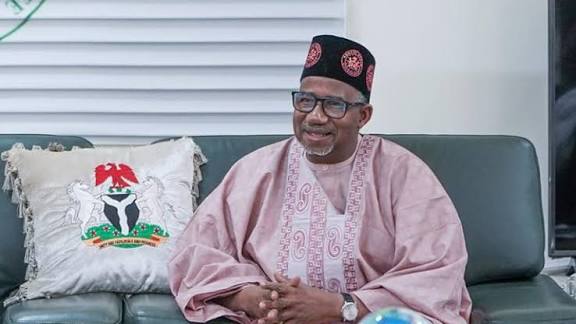
Bauchi State Governor Bala Mohammed has extended an emotional appeal to individuals he may have wronged throughout his years in public service and leadership.
The governor made the plea on Monday via a heartfelt message shared on his official Facebook page to commemorate his 67th birthday.
Mohammed expressed deep gratitude to Almighty Allah for His mercy and guidance throughout his journey in leadership and governance.
“As I mark my 67th birthday, I am filled with profound gratitude to Almighty Allah for His mercy and guidance throughout my journey in leadership and public service.
“This occasion is not one of elaborate celebrations, but of quiet reflection and thanksgiving for the grace to serve the people of Bauchi State,” he wrote.
The governor further stated, “I humbly seek forgiveness from anyone I may have wronged, knowingly or unknowingly, and I reaffirm my commitment to continue leading with fairness, equity, and a deep sense of responsibility.”
Mohammed acknowledged the outpouring of goodwill, prayers, and affection from his family, friends, colleagues, and the people of Bauchi State, noting that their support means a great deal to him.
“Looking ahead, my resolve remains unshaken: I will leave Bauchi better than I met it. With God’s help, we will continue to expand access to education, healthcare, and critical infrastructure.
“Already, our administration has exceeded public expectations in several key areas, and I am determined to build on this momentum,” he added.
The governor appreciated the various tributes offered in his honour and called for renewed optimism and collective unity as Bauchi continues to chart its future.

Nigeria must create 27 million jobs by 2030 — NESG

Mary Njoku calls on men to support partners facing postpartum depression

Osun deputy speaker visits Akinlalu community over Amotekun killings

Kano appoints new Bureau of Statistics DG

Bala Mohammed marks 67th birthday, asks for forgiveness

Driver dies as 40ft container crushes car on Lagos–Ibadan Expressway

Tragedy in Benue: Teenage boy found hanging in family home

Nigeria targets 2027 for full asset market valuation rollout

Union Bank holds first ‘Stay Recharged Health Walk’

You must be logged in to post a comment Login